
Overview
Agentel is an agent platform I built on Laravel for the kind of day-to-day automation I wanted to run. It isn't public and isn't meant to be - it's infrastructure for my own agents, with full control over what they can do, what they can spend, and how they get triggered.
Problem
I wanted agents I could trust with my inbox, calendar, and research - not ones that quietly run up a bill without me noticing. One hosted agent I tried burned through $5 in a few minutes on a single task: 15 web searches, 8 passes through my Gmail, for something that didn’t need either repeated like that. There was no way to cap how many times it could call a tool or set a limit on what the run was allowed to spend - it just did it. That’s what made per-run and per-tool budgets non-negotiable for me.
Architecture
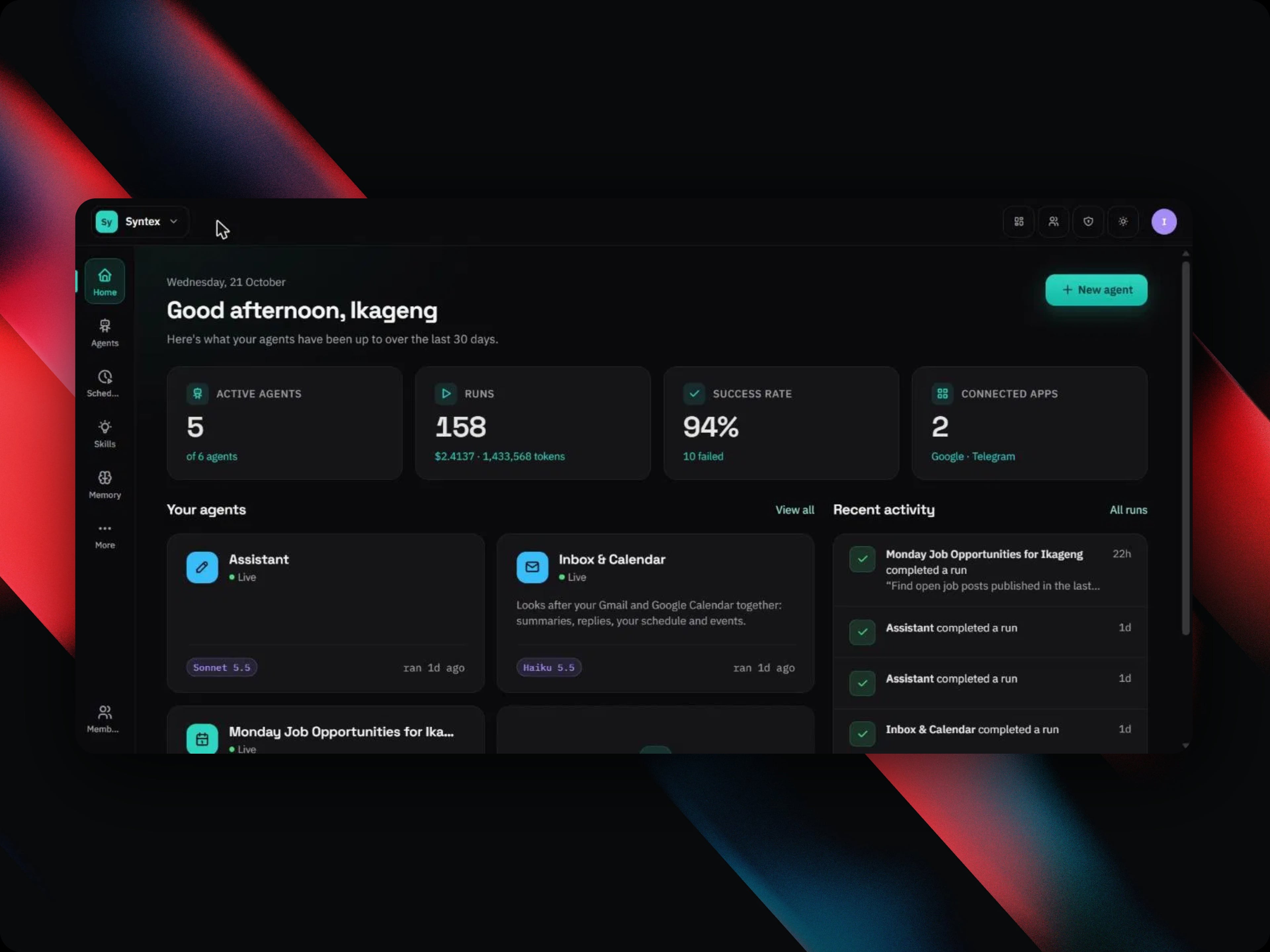
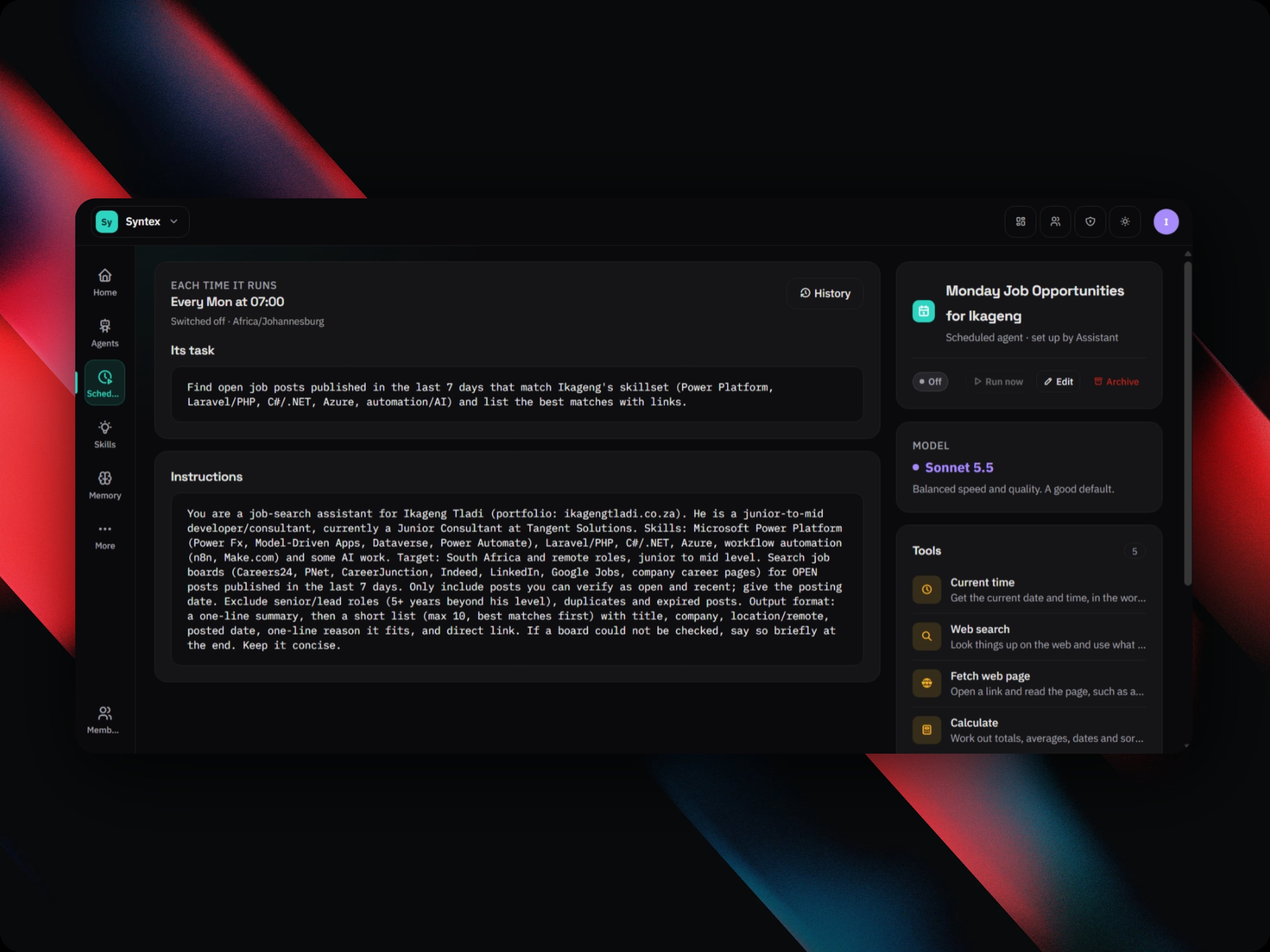
Agentel is a Laravel app built on the Laravel AI SDK, heavily customized around a workspace model. Each workspace holds agents that can delegate to sub-agents, each with its own model, tools, and skills. Skills are reusable instruction packs that attach to any agent, and a shared memory store lets agents recall facts across sessions. Agents run from four trigger types - a console chat, a Telegram bot, cron-style schedules, and manual test runs - all against the same agent definition, so channel logic is never duplicated. Every run is logged with its cost, token count, turn count, and model mix, broken down by agent and by individual turn.
Technical challenges
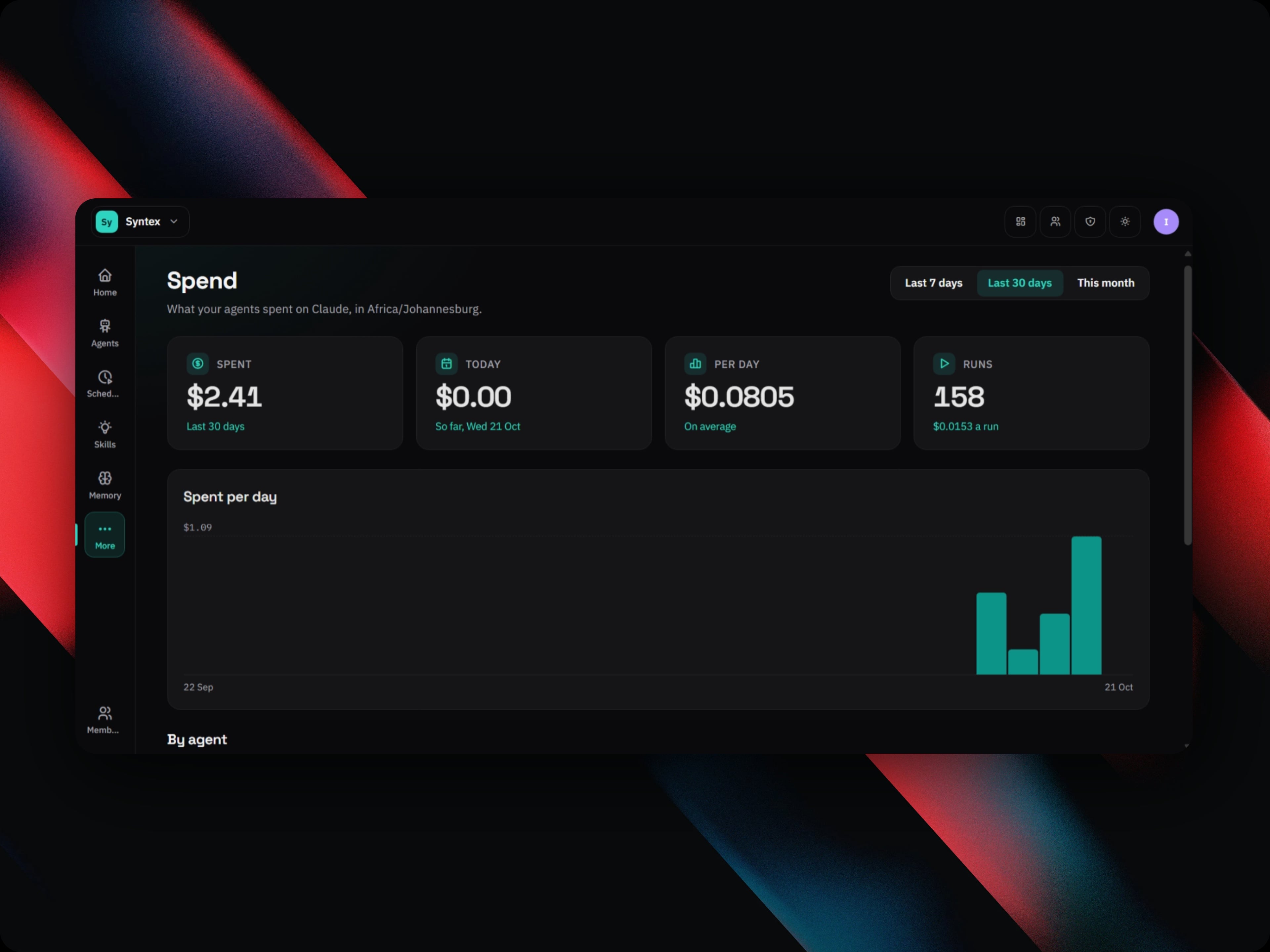
The main problem was making spend limits mean something once delegation is involved. A cost-alert threshold, a per-run cost cap, and a per-run token cap all had to count a parent agent’s sub-agent calls against the same budget, so a workspace limit can’t be quietly bypassed by fanning work out to sub-agents.
The other challenge was running the same agent definition, unmodified, across four very different trigger surfaces - a Telegram webhook, a cron schedule, a console session, and a manual test run - without forking the agent logic per channel.
Design decision
I built this on Laravel because it’s what I know well, rather than adopting an existing agent platform - I’d rather spend my time on code I understand than learn someone else’s system, and I wanted direct control over what my agents can spend and do, not a platform’s word for it.
A cost-alert threshold, a per-run cost cap, and a per-run token cap are set per workspace, and all three count a sub-agent’s turns against its parent’s run - so the budget holds once an agent starts delegating, not just at the top level.